
Wishlists: Helpful, Rude, or Just Honest?
Originally published on Substack
I have a wishlist and so do most of my closest friends.
The idea of keeping a wishlist (something you associate with Santa) might sound childish or quirky, but that’s part of what makes it fun.
My close friends and I actively update our wishlists and share access with each other. If I’m being completely honest, it’s made gift-giving in our circle significantly better.
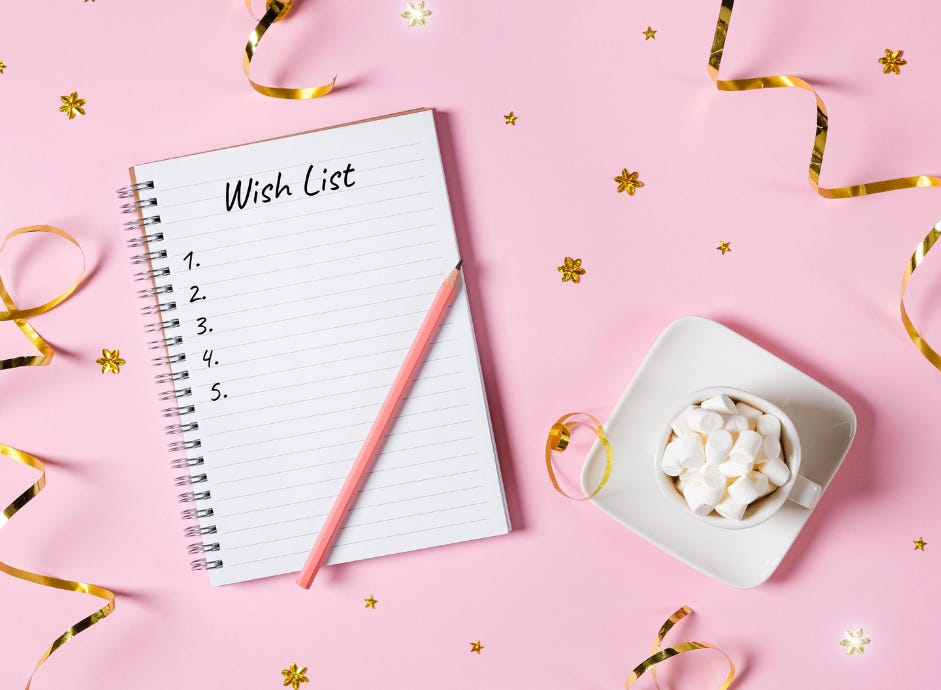
Gifting is tricky and the truth most recipients aren’t saying out loud is:
“If you’re going to get me a gift, I’d much rather you give me something I actually want than something you think I want, followed by me pretending I love it while quietly figuring out what to do with it later.”
And yet, wishlists are controversial.
Some people see them as practical.
Others see them as rude, entitled, or ungrateful.
That begs the question:
Who should decide what the gift is - the giver or the receiver?
The Case Against Wishlists
Let’s start with the criticism, because it’s not completely wrong.
People who dislike wishlists often argue that they:
Remove creativity and the beauty of surprise from gift-giving
Make the giver lazy
Turn gifts into transactions
Signal a lack of humility
A gift, from this perspective, is supposed to say:
“I see you. I know you. I thought about you.”
If I just pick something off a list, did I really say that?
The Case For Wishlists
On the other hand, people who love wishlists say they::
Reduce waste and clutter
Prevent duplicate or unwanted gifts
Save time and anxiety for the giver
Spare the receiver the emotional labor of pretending
And wishlists are especially helpful when:
You don’t know someone deeply
You’re buying for a milestone (wedding, baby, graduation)
You want to give something but don’t know what
In those cases, a wishlist isn’t rude, it’s a relief.
Who Wishlist Are Really For
Wishlists benefit everyone: both the people who know you deeply and the people who don’t.
For those who don’t know you well, a wishlist provides clarity. It removes guesswork and makes it easier to give something you’ll actually appreciate.
For those who do know you well, a wishlist doesn’t replace thoughtfulness, it frees it.
The people who truly understand you will still find ways to give gifts that aren’t on the list, gifts that feel personal, surprising, and deeply you.
So there’s no need to worry that a wishlist means you’ll never receive a thoughtful surprise again.
The list sets a baseline. Love and attention go beyond it.
So Who Decides What the Gift Should Be?
At its core, the wishlist debate is about control.
Should the giver control the gift because they’re giving?
Or should the receiver have a say in what enters their life?
I’m obviously biased towards the receiver having a say, mainly because I’ve seen how wasteful gifting can become when the receiver has none.
If we can think of wishlists as a baseline and not a limit, then maybe both the giver and the receiver work together to decide what the gift should be.
Nothing stops the giver from going beyond the list in ways that feel more personal and meaningful.
Still on the Fence About Wishlists?
My question to you is this:
Why are we so uncomfortable with letting people tell us what they actually want?
When giving is rooted in love and not performance, then clarity isn’t rude.
It’s kind.
With lots of love,
Your godmother Ada